Acoustic ceilings and wall panels in offices, schools, hospitals, and studios often use perforated gypsum board. The holes are not decorative; they let sound enter the panel and be absorbed by a backing layer, reducing reverberation in the room. Producing those holes consistently across large board volumes is the job of a gypsum board perforating machine. This article explains how the machine works, the main types, the parameters that affect output and acoustic performance, where the boards are used, and what a buyer should evaluate.
What Is a Gypsum Board Perforating Machine?
A gypsum board perforating machine punches or drills a pattern of holes through plasterboard to create sound-absorbing panels. In many production setups it is combined with a laminating step that applies an acoustic fleece or foil behind the perforations, which is what actually provides the absorption. The machine's role is to place holes accurately, at a defined diameter and spacing, across boards of standard size, while managing the large amount of gypsum dust generated.
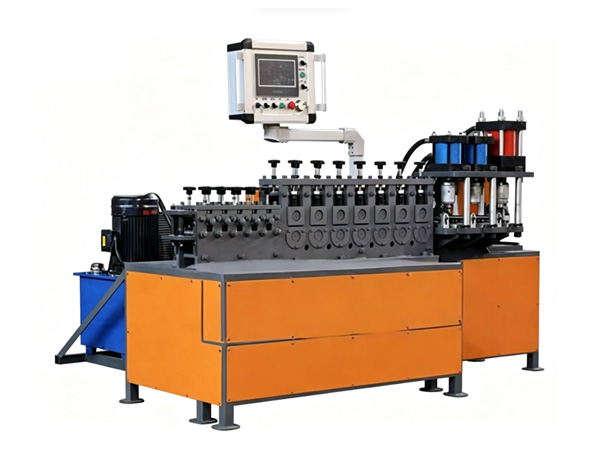
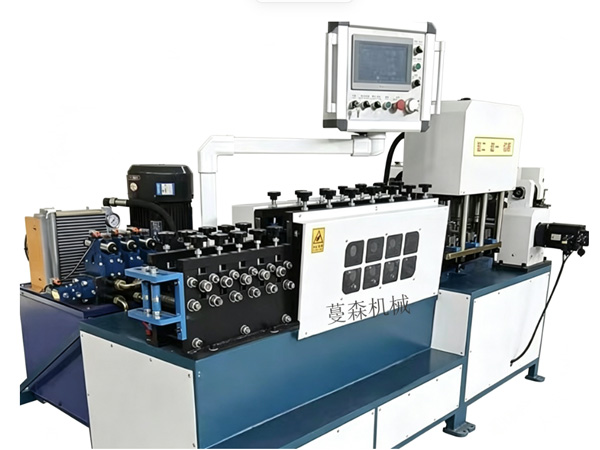
The value over manual or workshop drilling is throughput and pattern accuracy. Acoustic performance depends on consistent hole geometry and open area, so a production machine must repeat the pattern board after board.
How Does It Work?
The process follows a linear production flow.
Feeding – boards are loaded from a stack or infeed and carried on a conveyor through the machine.
Positioning – the board is positioned by CNC or servo control so holes land on the programmed grid.
Perforating – punch dies or perforating heads drive holes through the board in the set pattern.
Dust extraction – a connected extraction system captures gypsum dust at the tool and along the line.
Laminating (optional) – an acoustic fleece or foil is applied to the back of the board.
Stacking – finished boards are discharged and stacked for packing.
The acoustic effect comes from the combination of hole diameter, spacing (pitch), and open area, together with the backing material. Changing the pattern changes the sound absorption profile, which is why pattern flexibility matters for manufacturers serving different markets.
Key Components
Infeed and stacker – presents boards to the line without manual lifting.
Conveyor and positioning – moves and locates the board accurately.
Perforating station – punch dies or multi-head tooling that forms the holes.
CNC control – stores patterns and controls board or head positioning.
Dust extraction system – captures dust for worker safety and housekeeping.
Laminator (optional) – applies the acoustic backing layer.
Discharge and stacking – collects finished panels.
Main Types of Gypsum Board Perforating Machines
Single-Punch or Pattern Punch Machines
The board is positioned and punched in a fixed grid, sometimes with the board indexed between strokes. Simpler and lower cost, suited to moderate volumes and a limited set of patterns.
Multi-Head CNC Perforating Machine
Multiple perforating heads and CNC positioning allow flexible patterns and higher throughput. This is the common choice for acoustic panel manufacturers who need to switch hole layouts between orders.
Roller or Needle Perforation
Rotating perforating rollers or needles create continuous patterns as the board passes through. Often used for edge or decorative effects, though punch-based systems are more typical for precise acoustic grids.
Combined Perforating and Laminating Line
The machine perforates and then immediately applies the acoustic fleece or foil, producing a finished acoustic panel in one pass. This integration reduces handling and protects the open holes and backing.
Key Technical Parameters
Board size – maximum length and width the infeed and conveyor accept.
Board thickness range – standard and specialist gypsum boards vary in thickness.
Hole diameter and pitch – the range of diameters and spacings the tooling supports.
Open area – the percentage of surface that is holes, which drives acoustic performance.
Throughput – boards per hour or per shift at a given pattern.
Positioning accuracy – how precisely holes are placed, affecting pattern quality.
Dust extraction capacity – must handle the dust load for the board thickness and hole density.
Lamination option – whether the line applies backing in-line.
Power and footprint – site services and floor space required.
Specific numbers differ by model and should be confirmed from the datasheet. Where acoustic rating is claimed, it should be supported by testing to recognized standards rather than estimated from hole geometry alone.
Acoustic Performance and Pattern
Hole diameter, pitch, and the resulting open area, combined with a porous backing, determine how much sound energy a panel absorbs. The acoustic performance of a finished panel is normally measured and rated using recognized methods, for example reverberation-room absorption measurement and building sound-absorber rating standards. The perforating machine's job is to deliver the geometry those ratings depend on, consistently, board after board.
Materials and Board Types
Standard gypsum board is the base material, but moisture-resistant and fire-rated boards are also perforated for specific environments. Edge type (square or tapered) and board squareness affect feeding and stacking. Because perforation creates dust, the line must include effective extraction, and boards should be handled to avoid edge damage that complicates later installation.
Industrial and Commercial Applications
Acoustic ceilings in offices, schools, and hospitals
Wall acoustic panels in public buildings
Theatres, studios, and performance spaces
Commercial interior fit-outs
Recording and broadcast rooms
Transportation hubs and large open spaces needing reverberation control
In each setting, the panel must look uniform and perform to its rated absorption, which traces back to consistent perforation.
How to Choose the Right Machine
Match board sizes – confirm maximum length, width, and thickness against your product range.
Define patterns – list the hole diameters, pitches, and open areas you must produce.
Set throughput – choose single-punch for low volume, multi-head CNC for flexible, high output.
Plan dust control – verify extraction capacity for your thickest board and densest pattern.
Decide lamination – if you sell finished acoustic panels, an in-line laminator saves handling.
Check accuracy and repeatability – CNC positioning protects pattern quality across long runs.
Account for site – power, compressed air, floor space, and dust handling infrastructure.
Verify safety and support – guarding, dust control, machinery risk assessment (for example ISO 12100), spare parts, and service.
Maintenance and Operating Considerations
Punch and die cleaning – gypsum builds up and must be cleared to keep hole quality.
Dust system – monitor filters and suction; poor extraction degrades both safety and hole accuracy.
Conveyor and positioning – check alignment and recalibrate sensors for pattern accuracy.
Laminator – if fitted, maintain rollers, adhesive, and tension for even backing.
Lubrication and bearings – follow the schedule to avoid unplanned stops.
What to Provide When Requesting a Quote
Board dimensions and thickness range you will process
Required hole diameters, pitches, and open areas
Target throughput and shift pattern
Whether in-line lamination is needed
Power supply and available dust extraction infrastructure
Required certifications and testing for acoustic claims
Packing, shipping, or container requirements
Suppliers such as Botou Mansen Machinery publish their manufacturing capabilities so buyers can verify production scale before ordering. You can review the company profile at the manufacturer's about page, and explore related building-materials equipment at the main product site.
FAQ
How does perforating a gypsum board improve acoustics?
The holes let sound pass into the panel, where a porous backing layer absorbs it instead of reflecting it back into the room. The hole size, spacing, and open area, together with the backing, set the absorption characteristics.
What hole patterns and open area can these machines produce?
That depends on the tooling and control. CNC multi-head machines support flexible grids and a range of diameters and pitches. The specific limits should come from the model's datasheet for your board size and thickness.
Can the machine also laminate the acoustic backing?
Many production lines offer an integrated laminating station that applies fleece or foil immediately after perforation. If you sell finished acoustic panels, specify in-line lamination when requesting a quote.
How is gypsum dust handled?
The line includes a dust extraction system at the tool and along the conveyor. Extraction capacity must match the board thickness and hole density; neglecting it affects both worker safety and hole quality.
What board thicknesses can be perforated?
It depends on the machine's specification, but standard and specialist gypsum boards in typical ceiling and wall thicknesses are processed on purpose-built lines. Confirm the thickness range for the specific model.
Conclusion
A gypsum board perforating machine turns plain plasterboard into acoustic panels by placing consistent holes across each board, usually with dust extraction and often with in-line lamination. The principle is straightforward – feed, position, perforate, extract, and stack – but the buying decision rests on board size, pattern flexibility, throughput, dust control, and whether finished-panel lamination is required. For B2B buyers, the real value is repeatable hole geometry that supports rated acoustic performance at production volume.
Before requesting a quote, document your board dimensions, the hole patterns and open areas you must offer, your throughput target, and whether you need in-line lamination. Confirm the machine's dust extraction is adequate for your densest pattern, and review the supplier's manufacturing capability and after-sales support, since tooling changeover and dust-system service affect long-term uptime more than the headline board rate.
References
ASTM C1396/C1396M, Standard Specification for Gypsum Board. ASTM International.
ISO 354:2003, Acoustics – Measurement of sound absorption in a reverberation room. International Organization for Standardization.
ISO 11654:1997, Acoustics – Sound absorbers for use in buildings – Rating of sound absorption. International Organization for Standardization.
Gypsum Association, GA-216: Application and Finishing of Gypsum Panel Products. Gypsum Association.
Kalpakjian, S., & Schmid, S. R. (2014). Manufacturing Engineering and Technology (7th ed.). Pearson.