A hydraulic ironworker machine combines several metalworking operations in one frame and one hydraulic power unit. Instead of running a separate punch press, a bar shear, an angle shear, and a cropping station, a fabrication shop can perform all of them on a single combined machine. This article explains the functions of an ironworker, where it is used, the technical parameters that determine whether a model fits your work, and what to check before buying.
What Is a Hydraulic Ironworker Machine?
An ironworker is a multi-station fabrication machine built around a single C-frame or bridge-frame structure and one hydraulic system. The frame carries two or more work stations, each performing a different operation. The operator moves the workpiece between stations rather than moving it between separate machines. The result is a smaller footprint, fewer separate utilities, and less material handling than running individual machines for each function.
The "hydraulic" part matters. A hydraulic ironworker drives each station with fluid pressure, which delivers constant force through the stroke and allows smooth, controllable operation. That contrasts with mechanical machines that rely on flywheel energy and deliver force that varies with ram position.
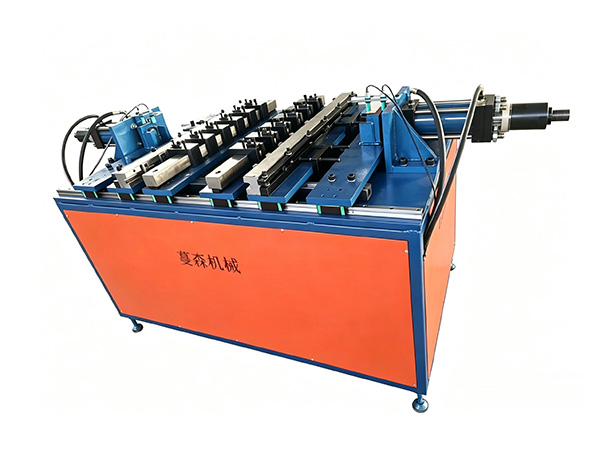
Core Functions and Stations
Punching Station
The punching station drives a punch through plate, flat bar, or sections to make round, square, oblong, or custom holes. It uses a punch-and-die set sized to the hole and material. This is the station that handles structural connections, gussets, bracket holes, and general fabrication hole-making.
Flat Bar Shear
The flat bar shear cuts flat stock to length or width by shearing it between an upper and lower blade. It is used for preparing material before bending, welding, or assembly.
Angle Shear
The angle shear cuts angle iron at 45 or 90 degrees with a notched blade designed for the section shape. This is a common operation in structural and framing work where angles are cut to length or mitred.
Section Cropping and Bar Shearing
Many ironworkers include a station for cropping channels, I-beams, square bar, and round bar. Cropping cuts the section squarely without significant deformation of the remaining material.
Notching
An optional notching station cuts corners or V-notches from plate or bar, used for bracket corners, box fabrication, and weld preparation.
Bending
Some configurations add a bending station for light press brake work, allowing small bends without a dedicated press brake.
How the Machine Works
All stations share one hydraulic power unit: an electric motor drives a pump that pressurizes fluid, which is routed by valves to the cylinder at the selected station. When the operator activates a station, fluid drives that station's ram. Because the force comes from system pressure acting on a piston, full rated force is available at any point in the stroke.
Station selection is usually mechanical: the operator positions the workpiece at the active station and engages it. More advanced models use a movable work table or station gates so only the selected station operates. The shared frame must be rigid enough to absorb cutting and punching loads without deflecting, since deflection affects hole location and cut squareness.
Where Ironworkers Are Used
Ironworkers appear wherever structural and general steel fabrication happens:
Structural steel fabrication and building frames
Transmission towers, bridges, and infrastructure
Trailer and truck body manufacturing
Agricultural equipment and machinery frames
HVAC and ductwork fabrication
Metal fencing, gates, and railings
Maintenance and repair workshops
Steel service centers and jobbing shops
Solar mounting and renewable energy structures
General fabrication contractors
Key Technical Parameters
Tonnage. The rated tonnage sets the maximum hole diameter and material thickness the punching station can handle, and the cutting capacity of the shear stations. Size the machine for your hardest regular job, not your average one.
Punch throat depth. This is the distance from the frame column to the back of the punch. It determines how far from a plate edge a hole can be placed. Measure your largest part and the furthest hole from an edge.
Shear capacity. Each shear station is rated for a maximum section size at a given material grade, commonly mild steel. Stainless or high-strength steel reduces effective capacity.
Blade length and opening. For the flat bar shear, blade length sets the maximum bar width. The cropping station opening sets the maximum section depth it accepts.
Stroke rate. Cycles per minute affect throughput. Hydraulic machines run slower than mechanical presses but are adequate for most fabrication volumes.
Motor power and working pressure. These indicate the hydraulic capacity behind the rated force and affect cycle speed and energy use.
Power supply. Voltage, phase, and frequency must match the installation site, especially for imported or cross-region equipment.
Buying Guide: How to Choose
Define your operations. List the cuts and holes you make most often. If you only punch plate, a dedicated punch press may be simpler. If you punch, shear flat bar, and crop angles daily, a combined ironworker consolidates those into one machine.
Match tonnage to material. Rate the machine for the thickest, strongest material you process regularly. Stainless steel and high-strength steel need more force than mild steel for the same section.
Check each station's capacity. Confirm the punch throat, flat bar shear width and thickness, angle shear size, and cropping capacity against your actual sections. A model strong in punching may be limited in angle shear.
Weigh footprint and handling. An ironworker saves floor space versus separate machines, but still needs clearance for long bars at the shear stations. Plan material flow around it.
Consider tooling and changeover. Check what punch and die sizes are standard, what is optional, and lead times for custom tooling. Frequent product changes favor models with quick station access.
Verify safety compliance. Ironworkers should be evaluated against relevant standards such as ISO 16092-3 for press safety and ISO 12100 for risk assessment, with proper guarding and controls.
Plan for support. Confirm spare parts availability, service support, and the supplier's manufacturing capability before ordering.
Customization and Options
Common options include extended punch throats for large plates, special tooling for custom hole shapes, angle and channel cropping attachments, a bending station, a positioning stop system for repeat lengths, and programmable control for automated sequences. Specify these only where they match a real production need, since each adds cost and complexity.
Maintenance and Operating Considerations
Keep hydraulic oil clean and at the correct level, and follow a scheduled change interval. Inspect seals and hoses for leaks, since fluid loss reduces force. Maintain punch and die sharpness and set correct clearance for the material. Check shear blade gap and index blades when worn. Test guards, two-hand controls, and emergency stops regularly, and enforce lockout/tagout during setup and maintenance.
What to Provide When Requesting a Quote
Material grades and thicknesses you process regularly
Typical hole diameters, shapes, and quantities
Flat bar, angle, and section sizes you shear or crop
Required punch throat depth and shear capacities
Power supply at the installation site
Target production volume and shift pattern
Required certifications, options, and shipping requirements
Manufacturers such as Botou Mansen Machinery publish their manufacturing capabilities so buyers can verify production scale before ordering. You can review the company profile at the manufacturer's about page, and explore related equipment at the main product site.
FAQ
What operations can a hydraulic ironworker perform?
A typical ironworker combines punching, flat bar shearing, angle shearing, and section cropping in one frame. Optional stations add notching and light bending. The exact station list varies by model, so confirm the configuration against your required operations.
What tonnage do I need for an ironworker?
Tonnage should cover your hardest regular job: the thickest, strongest material you punch or shear, not your average work. Stainless steel and high-strength steel require more force than mild steel for the same section, so size for the material you actually run.
Can an ironworker handle stainless steel?
Yes, but stainless steel needs more force and wears tooling faster than mild steel, so the effective capacity for stainless is lower than the mild steel rating. If stainless is a regular material, size the machine for it rather than for mild steel.
What is the difference between an ironworker and separate machines?
An ironworker puts punching, shearing, and cropping on one frame with one hydraulic system. Separate machines give higher individual capacity and speed per function but take more floor space, more utilities, and more material handling. The choice depends on your mix of operations and volume.
How much maintenance does an ironworker require?
Core tasks are keeping hydraulic oil clean and at the correct level, inspecting seals and hoses for leaks, maintaining punch and die sharpness and clearance, checking shear blade gap, and testing safety systems regularly. Most of this is straightforward scheduled maintenance.
Conclusion
A hydraulic ironworker machine consolidates punching, shearing, and cropping into one frame and one hydraulic power unit, which reduces floor space and material handling for mixed fabrication work. The functions to evaluate are the punching station, flat bar shear, angle shear, and cropping capacity, each rated against your actual material grades and sections. The main buying factors are tonnage matched to your hardest job, punch throat depth, per-station capacity, tooling availability, safety compliance, and supplier support. For B2B buyers, the practical value is fewer separate machines, simpler material flow, and the ability to handle the common cut-and-punch operations of a fabrication shop in one place. Before requesting a quote, document your material grades, hole sizes, section sizes, and production volume, then confirm each station's capacity covers your work with margin.
References
ISO 16092-3:2017, Machine tools safety – Presses – Part 3: Safety requirements for hydraulic presses. International Organization for Standardization.
ISO 12100:2010, Safety of machinery – General principles for design – Risk assessment and risk reduction. International Organization for Standardization.
ASTM A36/A36M, Standard Specification for Carbon Structural Steel. ASTM International.
Kalpakjian, S., & Schmid, S. R. (2014). Manufacturing Engineering and Technology (7th ed.). Pearson.