In steel fabrication and general metalworking shops, punching holes and cutting sections are everyday operations. When they are carried out on separate machines, the workflow suffers from extra floor space, repeated material handling, and duplicated labor. A hydraulic punching and cutting machine combines these two operations into a single hydraulically powered unit, allowing one operator to punch holes and shear bars, plates, and sections without changing equipment. This article explains how the machine works, the main configurations available, the technical parameters that affect performance, where it is used, and what a buyer should evaluate before purchasing.
What Is a Hydraulic Punching and Cutting Machine?
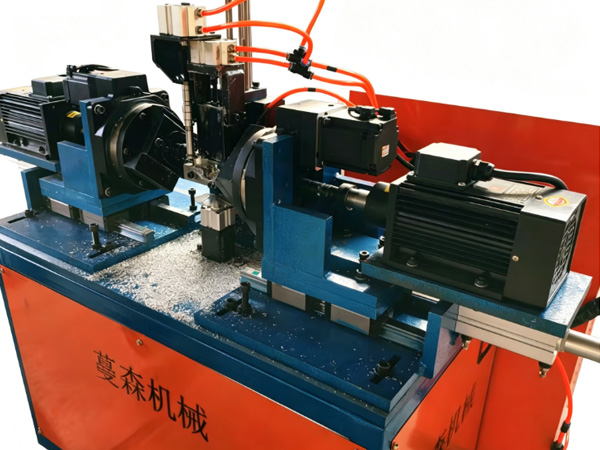
A hydraulic punching and cutting machine is most often built as a combined punch-and-shear unit, a category sometimes referred to as a hydraulic ironworker. It uses hydraulic cylinders to apply controlled force for two primary functions: punching holes through metal with a punch-and-die set, and shearing (cutting) bars, plates, angles, and other sections with blades. In a combined machine, both functions share one frame and one hydraulic power unit.
The defining difference from a mechanical press is the power source. A mechanical press stores energy in a flywheel and converts rotation into motion through a crank or eccentric. A hydraulic unit generates force through pressurized fluid delivered to a cylinder. That design gives smooth, adjustable stroke control and makes full available tonnage accessible at any point in the ram stroke, which is useful for both punching and cropping operations.
How Does It Work?
The working principle follows a standard hydraulic circuit. An electric motor drives a pump that pressurizes hydraulic fluid drawn from a tank. Directional and relief valves route the fluid to the main cylinder, and the pressurized fluid extends the piston rod, driving the ram downward. When the ram retracts, fluid returns to the tank through the valve block.
The force delivered at the tool is the product of system pressure and the piston area. The force actually required by the operation depends on the material. For punching, the required force is roughly proportional to the material shear strength, the perimeter of the hole, and the material thickness. For shearing, the required force relates to the material shear strength, the length being cut, and the thickness, adjusted by a factor that accounts for blade clearance and penetration. In practice, the machine must be sized for the hardest, thickest combination it will regularly see, not just the average job.
During punching, the ram pushes the punch through the workpiece, which is supported on a die. The metal shears at the die opening and the slug drops through. During cutting, a moving blade passes a fixed blade with a small, controlled clearance, and the section separates cleanly. Because the force is fluid-driven, the stroke speed and pressure can be tuned to the material, which helps control burr and edge quality.
Key Components
Hydraulic power unit – tank, pump, electric motor, relief and directional valves, and filtration that keep the fluid clean.
Main cylinder and ram – converts fluid pressure into linear force at the tool.
Punch and die station – where holes are produced; accepts standard and custom tooling.
Shear station – blades for cutting flat bar, round or square bar, and sometimes angle or channel.
Frame – an open-throat C-frame for accessible single-station punching, or a dual-cylinder bridge-style frame for combined ironworkers.
Worktable, gauges, and backstops – locate the workpiece for repeatable holes and cuts.
Control system – foot pedal, two-hand controls, or PLC/HMI for programmable positioning.
Safety guarding – physical guards, light curtains, or protected controls around the tool area.
Main Types of Hydraulic Punching and Cutting Machines
The category is not one fixed design. The right configuration depends on the operations a shop actually runs.
Combined Punching and Shearing Machine (Hydraulic Ironworker)
This is the most common form of an integrated hydraulic punching and cutting machine. Several stations share one frame and hydraulic power: a punching station, a flat-bar shear, an angle shear, a round and square bar shear, and often a notching station. Some versions add channel or I-beam cropping. For general fabrication shops, the multi-station layout covers most daily cutting and hole-making work in one footprint.
Single-Station Hydraulic Punch
A dedicated punching machine with a deep throat is suited to plate and structural punching where large parts must be positioned under the punch. Base plates, gussets, and connection plates are typical work. These machines prioritize throat depth and punch capacity over combined shearing.
Section and Bar Cutting Specialists
Some hydraulic machines focus on cropping structural sections: angles, channels, beams, and round or square bars. They use dedicated blades and gauging so the cut face stays square and the operator handles long sections safely. These are often paired with, or built into, a punching station.
Portable Hydraulic Punching Units
A separate hydraulic power pack drives a punching head that can be taken to the workpiece. This is valuable for on-site work such as beam connections, tower joints, and flange holes, where moving the part to a fixed machine is impractical.
CNC Hydraulic Punching Lines
For higher-volume plate processing, CNC lines use automatic positioning with a turret or gantry and hydraulic or servo punching. This is a different scale from a combined ironworker, but it shares the same hydraulic punching principle and is worth comparing when production volume is high and parts are repeatable.
Key Technical Parameters
Rather than treating specifications as a list to memorize, it helps to understand what each parameter changes for the buyer.
Punching force (tonnage) – sets the maximum hole diameter that can be punched in a given thickness. Undersizing forces slow multi-step punching or leaves the job impossible.
Shearing capacity – stated as maximum flat-bar width and thickness, maximum round or square bar diameter, and maximum angle leg size. Match these to the sections you cut most often.
Throat depth – the distance from the frame centerline to the punch. It limits how far from an edge a hole can be placed and how large a plate can be positioned. Deep-throat machines cost more but handle larger parts.
Stroke length and strokes per minute – affect cycle time. Longer strokes suit thicker material; higher stroke rates suit thinner, high-volume work.
Motor power and working pressure – indicate the hydraulic capacity behind the rated force. They also affect energy use and required site power.
Tooling and die-opening range – the largest punch diameter the holder accepts and the range of available dies constrain job flexibility.
Power supply – most industrial units use three-phase power; voltage and frequency must match the installation site, especially for export or cross-region deployment.
As a category reference, combined ironworkers are commonly specified across a wide punching-force range, with shearing capacities scaled to match the frame. Exact figures should always come from the specific model's datasheet, since force, capacity, and tooling limits vary by design.
Materials and Tooling Considerations
Material choice changes the force and tool life required. Mild steel punches and shears readily. Stainless steel has higher strength and work-hardens, so it needs more force and wears punches, dies, and blades faster. Aluminum needs less force but can produce more pronounced burr if clearance and feed are not controlled. The punch-to-die clearance should match the material thickness; correct clearance reduces burr, improves edge quality, and extends tool life.
Tooling is a real operating cost. Standard round, oblong, and square punches cover most work, while custom shapes serve specialized parts. Shear blades are typically hardened steel and must be kept sharp and correctly set. Strippers, backgauges, and stops determine repeatability. For shops running mixed jobs, tool changeover time is part of the real productivity picture and should be weighed alongside raw tonnage.
Industrial Applications
Because punching and cutting are fundamental to metal fabrication, these machines appear across many industries:
Structural steel fabrication and building frames
Bridges, transmission towers, and other infrastructure
Trailers, truck bodies, and commercial vehicle components
Electrical enclosures, cabinets, and panel boxes
HVAC ductwork, brackets, and mounting hardware
Shipbuilding and offshore structures
Agricultural machinery and equipment frames
Elevators, escalators, and material-handling equipment
Fencing, guardrails, and safety barriers
Metal furniture, shelving, and racking
In each case, the value is the same: fewer machines, less handling, and one operator covering both hole-making and section cutting.
How to Choose the Right Machine
Selection should start from the workload, not from a headline tonnage number.
Define the workload. List material grades, thickness range, typical hole diameters and quantities, and the sections to be cut.
Size for the hardest job. Match force and capacity to the thickest, strongest material you will run regularly, with margin for occasional peaks.
Check throat depth. Compare it against your largest part and the furthest hole from an edge.
Match stations to operations. A multi-station ironworker helps general shops; a deep-throat punch helps plate-focused work.
Consider production volume. Manual foot-pedal control suits jobbing work; CNC positioning suits repeat, high-volume runs.
Set accuracy requirements. Repeatable gauging or CNC reduces scrapped parts on tight-tolerance work.
Account for the site. Floor space, three-phase power, and operator skill all affect feasibility.
Verify safety and standards. Hydraulic presses should be evaluated against relevant safety standards such as ISO 16092-3 for hydraulic presses, with proper guards and control measures.
Review the support ecosystem. Tooling availability, spare parts, lead times, and customization support matter as much as the base specification over the machine's life.
Maintenance and Operating Considerations
A hydraulic punching and cutting machine is robust, but predictable maintenance protects accuracy and uptime.
Hydraulic oil – use the correct grade, keep it clean with regular filtration, check level and condition, and follow a scheduled change interval.
Seals and hoses – inspect for leaks and wear; fluid loss directly reduces force and can damage components.
Blades and tooling – sharpen or rotate shear blades on schedule, and inspect punches and dies for chipping or excessive wear.
Lubrication and alignment – keep guides and moving parts lubricated, and verify blade clearance and ram alignment periodically.
Safety systems – test guards, controls, and emergency stops, and enforce lockout/tagout during setup and maintenance.
Operator training – correct setup, tool selection, and feeding technique reduce defects and accidents.
What to Provide When Requesting a Quote
To get an accurate offer and avoid mismatched equipment, share the following with the manufacturer:
Material grade and thickness range you will process
Typical hole diameters, patterns, and quantities per shift
Sections to be cut (flat bar, angle, round or square bar, channel) with sizes
Required throat depth and worktable size
Power supply (voltage, phase, frequency)
Target production rate and shift pattern
Required certifications and shipping or container requirements
Any custom tooling, gauges, or automation needs
Suppliers such as Botou Mansen Machinery publish their manufacturing capabilities and facilities for buyers who want to verify production scale and process control before ordering. You can review the company profile at the manufacturer's about page, and explore the broader range of fabrication equipment at the main product site.
FAQ
What is the difference between a hydraulic punching and cutting machine and a hydraulic ironworker?
The terms often describe the same class of combined equipment. "Hydraulic ironworker" is the common industry name for a machine that punches and shears in one frame. "Hydraulic punching and cutting machine" describes the function more literally. Some dedicated machines are punch-only or shear-only, so it is worth confirming the station configuration rather than relying on the name.
Can one machine punch stainless steel and aluminum as well as mild steel?
Yes, a hydraulic unit can process all three, but the requirements differ. Stainless needs more force and wears tooling faster, while aluminum needs less force but demands careful clearance control to manage burr. Size the machine for the hardest material in your regular workload, not just the easiest.
How is punching force related to hole size and plate thickness?
Required punching force rises with both the hole perimeter and the material thickness, scaled by the material's shear strength. A larger diameter or a thicker plate increases the force needed. This is why tonnage and maximum hole diameter are stated together for a given thickness in any credible specification.
What throat depth do I need for my parts?
Throat depth sets how far from a plate edge a hole can be punched and how large a part can be positioned under the punch. Measure the largest part and the greatest distance from an edge to a required hole, then choose a throat depth with margin. Undersizing forces awkward handling or makes some holes impossible.
What maintenance does a hydraulic punching and cutting machine require?
Core tasks are keeping hydraulic oil clean and at the correct level, inspecting seals and hoses for leaks, sharpening or rotating shear blades, checking punch and die wear, verifying alignment and clearance, and testing safety systems. A simple scheduled checklist prevents most unplanned downtime.
Conclusion
A hydraulic punching and cutting machine solves a practical fabrication problem: it consolidates hole-making and section cutting into one operator-controlled, hydraulically powered unit. Its working principle is straightforward – a pump and valve system delivers fluid pressure to a cylinder that drives a punch or blade – but the buying decision is not. The parameters that matter are punching force, shearing capacity, throat depth, station configuration, material compatibility, and safety compliance. For B2B buyers, the real value is lower handling, reduced floor space, and steadier throughput across structural, automotive, electrical, and general fabrication work.
Before requesting a quote, document your actual materials, thicknesses, hole patterns, and sections to be cut, then match the machine to that workload with margin for peaks. Buyers evaluating suppliers should also confirm manufacturing capability and after-sales support, since tooling, spare parts, and service determine long-term cost far more than the headline tonnage. Reviewing the manufacturer's profile and product range is a sensible first step before committing to a specific model.
References
ISO 16092-3:2017, Machine tools safety – Presses – Part 3: Safety requirements for hydraulic presses. International Organization for Standardization. https://www.iso.org/standard/63390.html
ISO 4413:2010, Hydraulic fluid power – General rules for the application of equipment to transmission and control systems. International Organization for Standardization.
ISO 12100:2010, Safety of machinery – General principles for design – Risk assessment and risk reduction. International Organization for Standardization.
Han, H., Pan, S., Zhang, J., Xu, H., Li, C., & Zhang, Y. (2022). Effect of pressure change in high-speed punch hydraulic system on shear surface quality. The International Journal of Advanced Manufacturing Technology, 120, 4207–4215. https://doi.org/10.1007/s00170-022-08938-2
Marciniak, Z., Duncan, J., & Hu, S. J. (2002). Mechanics of Sheet Metal Forming (2nd ed.). Butterworth-Heinemann.