Making holes in metal is one of the most repeated operations in fabrication. A metal punching machine drives a punch through the workpiece to shear a clean hole, faster and more consistently than drilling for many production tasks. This article compares the main types of punching machines, reviews where they are used, and explains the selection factors that determine hole quality, required force, and throughput.
What Punching Is
Punching is a shearing process. A punch presses the material against a die, and the material fails in shear along the punch perimeter, separating a slug from the sheet or plate. The hole edge is formed by shear, not by cutting rotation, which is why punching is fast for repeated holes and why force depends on the hole's perimeter rather than its area.
How Punching Force Is Determined
The force required to punch a hole is approximately the material shear strength multiplied by the hole perimeter and the material thickness. For a round hole this means force rises with both diameter and thickness. A 20 mm hole in 6 mm mild steel needs far less force than a 40 mm hole in 12 mm plate. This relationship explains why machine capacity is always stated as a combination of maximum hole diameter, maximum thickness, and material grade – they are interdependent.
Types of Metal Punching Machines
Single-Station Hydraulic Punch Press
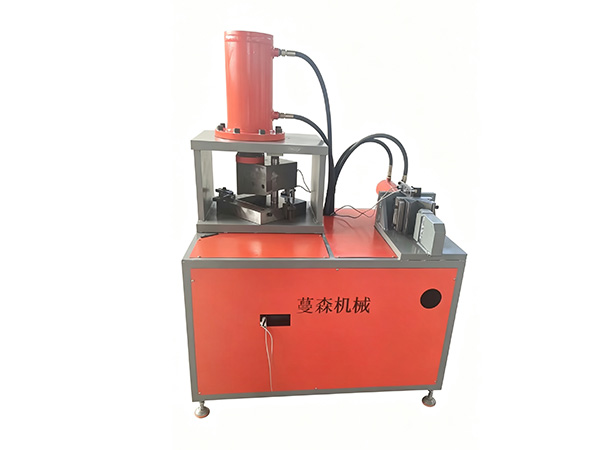
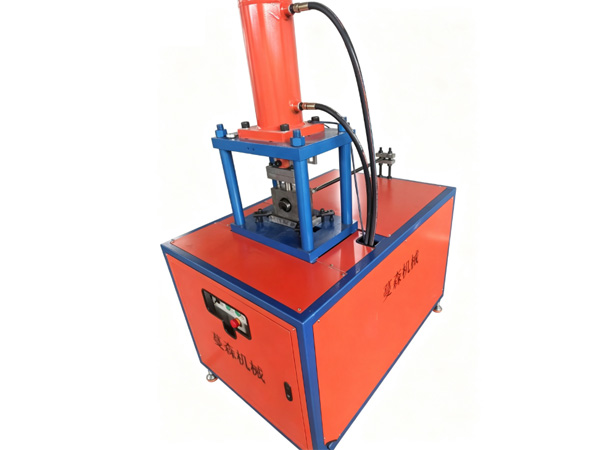
A dedicated hydraulic punch press uses one cylinder and a deep throat to punch plate and structural sections. It delivers constant force through the stroke and suits plate work, base plates, gussets, and machinery frames where hole size and throat depth matter more than cycling speed.
Hydraulic Ironworker Punch Station
A combined ironworker carries a punching station alongside shearing and cropping stations, all served by one hydraulic system. For shops that punch and cut mixed sections, this avoids a separate punch press. The punch capacity is one of several ratings on the same machine.
Mechanical Punch Press
A mechanical press stores energy in a flywheel and delivers it through a crank or eccentric. It cycles faster than a hydraulic press but delivers force that varies with ram position. It suits high-volume repeat punching where speed matters and stroke force is predictable.
CNC Turret Punch Press
A CNC turret punch uses a rotating tool turret and automatic sheet positioning to punch complex hole patterns at volume. It is the choice for repeated, programmed part production with minimal manual handling, though it carries higher capital cost than manual or semi-automated machines.
Portable Hydraulic Punch
A separate hydraulic power pack drives a punching head taken to the workpiece. It is used on site for beam connections, tower joints, and structural steel where moving the part to a fixed machine is impractical.
Common Applications
Structural steel fabrication and building frames
Bridges, transmission towers, and infrastructure
Trailers, truck bodies, and commercial vehicles
Electrical enclosures, switchgear, and panel boxes
HVAC equipment and ductwork
Agricultural machinery and equipment frames
Shipbuilding and offshore structures
Fencing, guardrails, and safety barriers
Solar mounting and renewable energy frames
Metal furniture, shelving, and racking
Key Selection Factors
Rated force and material grade. Size the machine for the thickest, strongest material you punch regularly. Stainless steel and high-strength steel need more force than mild steel for the same hole.
Maximum hole diameter. This is set by the tonnage and the die capacity at a given thickness. Confirm it against your largest hole, not your average one.
Throat depth. The distance from the column to the punch sets how far from an edge a hole can be placed. Measure your largest part and the furthest hole from an edge.
Stroke rate. Cycles per minute affect throughput. Hydraulic machines are slower than mechanical or CNC but adequate for most fabrication volumes.
Tooling and changeover. Check standard punch and die sizes, optional sizes, and lead times for custom shapes. Frequent pattern changes favor quick-change tooling or CNC positioning.
Positioning accuracy. Manual layout and clamping suit jobbing work. CNC positioning suits repeat, tight-tolerance batches.
Power supply. Voltage, phase, and frequency must match the installation site, especially for imported equipment.
Materials and Tooling
Mild steel is the standard reference and punches cleanly. Stainless steel needs more force and wears punch and die faster. Aluminum needs less force but produces more burr if clearance is not controlled. The punch-to-die clearance – the gap between punch and die opening – should be set for the material and thickness; correct clearance reduces burr, improves edge quality, and extends tool life. Standard round, oblong, and square punches cover most work, with custom shapes available for specialized parts.
Maintenance and Operating Considerations
Keep hydraulic oil clean and at the correct level, and inspect seals and hoses for leaks. Maintain punch and die sharpness and set correct clearance for the material. Verify ram alignment periodically and keep guides lubricated. Test guards, two-hand controls, and emergency stops regularly, and enforce lockout/tagout during setup and maintenance.
What to Provide When Requesting a Quote
Material grades and thickness range you process
Typical hole diameters, shapes, and quantities per shift
Required throat depth and worktable size
Target production rate and shift pattern
Power supply at the installation site
Required certifications and shipping requirements
Any custom tooling or automation needs
Manufacturers such as Botou Mansen Machinery publish their manufacturing capabilities so buyers can verify production scale before ordering. You can review the company profile at the manufacturer's about page, and explore related equipment at the main product site.
FAQ
How is required punching force related to hole size?
Required force is roughly the material shear strength multiplied by the hole perimeter and the material thickness. Larger holes or thicker, stronger material need more force, which is why machine capacity is always stated as maximum hole diameter, thickness, and material grade together.
What is the difference between a punch press and an ironworker punch station?
A punch press is a dedicated machine for punching only. An ironworker punch station is one of several operations on a combined machine sharing one hydraulic system. Choose a dedicated press for high punching volume; choose an ironworker when you also shear and crop regularly.
Can a metal punching machine handle stainless steel?
Yes, but stainless steel needs more force and wears tooling faster than mild steel, so effective capacity is lower than the mild steel rating. If stainless is a regular material, size the machine for it rather than for mild steel.
What affects hole edge quality in punching?
Edge quality depends on punch and die sharpness, correct punch-to-die clearance for the material and thickness, and adequate stripper function. Incorrect clearance increases burr and accelerates tool wear; dull tooling degrades the hole edge.
When should I choose a CNC turret punch over a hydraulic press?
Choose a CNC turret punch when you run repeated, programmed hole patterns at volume and need tight tolerances with minimal manual handling. Choose a hydraulic press for lower-volume, larger, or deeper-throat punching where cycling speed is less critical.
Conclusion
A metal punching machine shears clean holes through metal using force that depends on hole perimeter, material thickness, and shear strength. The main types – single-station hydraulic presses, ironworker punch stations, mechanical presses, CNC turret punches, and portable units – suit different volumes, hole sizes, and materials. The key selection factors are rated force matched to your hardest material, maximum hole diameter, throat depth, tooling and changeover needs, positioning accuracy, and power supply. For B2B buyers, the practical value is repeatable hole quality and the right balance of force, throat, and throughput for the actual workload. Before requesting a quote, document your material grades, hole sizes, quantities, and throat requirements, then confirm the machine covers your hardest regular combination with margin.
References
ISO 16092-3:2017, Machine tools safety – Presses – Part 3: Safety requirements for hydraulic presses. International Organization for Standardization.
ISO 12100:2010, Safety of machinery – General principles for design – Risk assessment and risk reduction. International Organization for Standardization.
ISO 4413:2010, Hydraulic fluid power – General rules for the application of equipment to transmission and control systems. International Organization for Standardization.
Kalpakjian, S., & Schmid, S. R. (2014). Manufacturing Engineering and Technology (7th ed.). Pearson.