A hydraulic ironworker is a combined metal fabrication machine that performs several operations on one frame using a single hydraulic power unit. For a fabrication shop, it answers a simple problem: punching holes, shearing bars, and cropping sections are everyday tasks, but running a separate machine for each one takes floor space, utilities, and handling time. This guide explains what an ironworker is, how it works in practice, what it handles, and where it fits in a metal fabrication workflow.
The Problem Ironworkers Solve
General fabrication work rarely needs just one operation. A bracket needs holes punched and corners notched. A frame needs angles cut to length and plates punched for connections. A gusset needs both a hole pattern and a square crop. Running each task on a separate dedicated machine means moving material between stations, setting up different utilities, and occupying more floor area. For shops with mixed, moderate-volume work, that overhead adds up.
An ironworker addresses this by putting the common operations on one rigid frame with one hydraulic system. The operator walks the workpiece to the station it needs, rather than moving the part between machines.
What a Hydraulic Ironworker Is
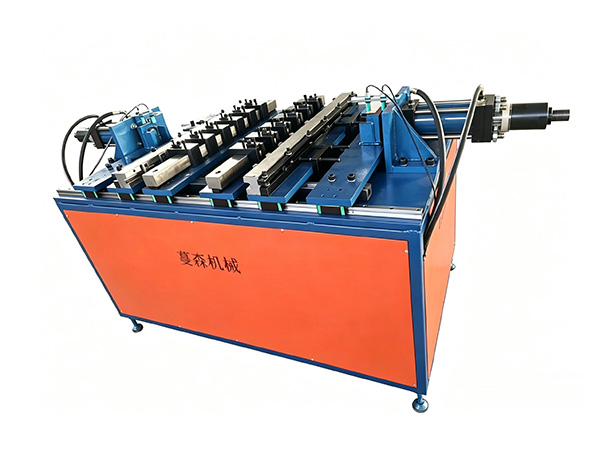
At its core, an ironworker is a C-frame or bridge-frame structure that carries two or more work stations. A single hydraulic power unit serves all of them. The "hydraulic" designation means each station is driven by pressurized fluid rather than by a mechanical flywheel or crank.
The practical consequence of hydraulics is constant force through the stroke. Because the force comes from system pressure acting on a piston area, the machine delivers its rated force at any point in the ram travel. That makes hydraulic drive predictable for variable material thicknesses and for operations that need force deep in the throat.
How It Works
An electric motor drives a pump that draws fluid from a reservoir and raises its pressure. Directional valves route that fluid to the cylinder at the selected station. When the operator engages a station, fluid extends the piston and drives the ram: a punch through the plate, or a blade through the bar.
Station selection is typically arranged so only the active station operates. In simpler machines the operator physically positions the part at the chosen station; in more developed models a movable table or gated stations isolate the operation. The frame must stay rigid under load, because deflection during punching or shearing shifts hole location and cut squareness.
The Main Stations
Punching: drives a punch and die through plate or bar to make holes of various shapes and sizes.
Flat bar shear: cuts flat stock between upper and lower blades to length or width.
Angle shear: cuts angle iron, usually at 45 or 90 degrees, with a blade shaped for the section.
Section cropping: crops channels, beams, square bar, and round bar squarely.
Notching: optional, cuts corners or V-notches for brackets and weld prep.
Bending: optional, light press brake work without a dedicated brake.
Not every model carries every station. The station list is the first thing to confirm against your actual work.
Ironworker vs Separate Machines
A combined ironworker trades some per-function capacity and speed for consolidated operation. Separate dedicated machines – a punch press, a guillotine shear, an angle shear – each deliver higher individual capacity and faster cycling at that one task, but they occupy more floor space, need more utilities, and require moving material between them. An ironworker suits shops where no single operation dominates and where mixed tasks are the norm.
Ironworker vs CNC Fabrication Centers
A CNC turret or gantry punch and a CNC plasma or laser cutting center excel at high-volume, repeat, programmable part production with tight tolerances and minimal handling. An ironworker is a manual or semi-automated machine better suited to jobbing work, maintenance, and moderate batches where setup simplicity and low capital cost matter more than fully automated throughput. The choice is about production profile, not which machine is "better."
Materials It Handles
Mild steel is the standard reference material and processes readily. Stainless steel requires more force and wears tooling faster, so effective capacity drops compared with the mild steel rating. Aluminum needs less force but is prone to burr and surface marking if blade gap and tooling are not set correctly. Each material benefits from the right tooling, clearance, and blade gap settings.
Who Uses Ironworkers
Ironworkers are operated by fabrication shops, structural steel contractors, maintenance teams, steel service centers, and jobbing workshops. The users are typically fabricators and fitters who need to punch, shear, and crop a range of sections without dedicating a machine to each operation. Typical settings include structural frames, trailers, agricultural equipment, HVAC ductwork, fencing, and renewable energy structures.
Practical Limitations
An ironworker is not a substitute for high-volume CNC processing. Its stroke rate is lower than mechanical or CNC machines, so it is unsuited to very high repeat volumes of one part. Capacity is also bounded: each station is rated for a maximum section at a given material grade, and stainless or high-strength steel reduces that capacity. Very large plates may exceed the punch throat, and very long sections need clearance around the shear stations. Understanding these limits prevents specifying the wrong machine for the workload.
Operating and Safety Basics
Operators should confirm the correct tooling and clearances for the material before each operation, keep hands clear of the tool area, and use the provided guards and two-hand or interlocked controls. Hydraulic pressure should be matched to the task, and safety systems tested on a schedule. Lockout/tagout must be applied during tool changes and maintenance.
FAQ
What is the difference between a hydraulic and a mechanical ironworker?
A hydraulic ironworker drives each station with fluid pressure, delivering constant force through the stroke and smooth control. A mechanical ironworker uses flywheel energy through a crank, which delivers force that varies with ram position and generally cycles faster but with less stroke control. Hydraulic is common for combined ironworkers because one power unit serves several stations.
Is an ironworker the same as a punch press?
No. A punch press performs punching only. An ironworker includes punching plus shearing and cropping stations on one frame. If you only punch plate at volume, a dedicated punch press may be the better fit; if you also shear and crop regularly, an ironworker consolidates those tasks.
What materials can a hydraulic ironworker process?
Mild steel is the standard material. Stainless steel and aluminum are also processed, but stainless needs more force and wears tooling faster, and aluminum needs careful clearance to avoid burr and marking. Effective capacity for each material differs from the mild steel rating.
When should I choose an ironworker instead of CNC equipment?
Choose an ironworker for mixed, moderate-volume, or jobbing work where setup simplicity, low capital cost, and consolidated operations matter. Choose CNC punching or cutting centers when you need high-volume repeat production, programmed part geometry, and tight tolerances with minimal manual handling.
Can one ironworker handle all my fabrication cutting?
It can handle the common punch, shear, and crop operations for mixed fabrication work, within each station's rated capacity. Very high volumes, very large sections, or tight programmable tolerances may require dedicated or CNC equipment alongside it.
Conclusion
A hydraulic ironworker is a combined fabrication machine that puts punching, shearing, and cropping on one frame served by a single hydraulic system. Its value is consolidation: fewer machines, less floor space, and simpler material flow for shops with mixed, moderate-volume work. The practical points to understand are how the shared hydraulic drive delivers constant force, which stations a given model carries, how material grade affects capacity, and where the machine's limits lie compared with dedicated or CNC equipment. For fabricators, the right question is not whether an ironworker is the most powerful machine, but whether consolidated manual operation matches the production profile better than separate or automated alternatives.
References
ISO 16092-3:2017, Machine tools safety – Presses – Part 3: Safety requirements for hydraulic presses. International Organization for Standardization.
ISO 12100:2010, Safety of machinery – General principles for design – Risk assessment and risk reduction. International Organization for Standardization.
ASTM A36/A36M, Standard Specification for Carbon Structural Steel. ASTM International.
Kalpakjian, S., & Schmid, S. R. (2014). Manufacturing Engineering and Technology (7th ed.). Pearson.